
Thymosin Alpha-1
Thymosin Alpha-1 Price range: $55.00 through $140.00

Back to products
FOXO4
FOXO4 Original price was: $320.00.Current price is: $280.00.

MOTS-C

Price range: $60.00 through $175.00

MOTS-c is a peptide composed of 16 amino acids, encoded by mitochondrial DNA. It activates AMPK to regulate metabolic pathways like fatty acid oxidation and gluconeogenesis, helping maintain blood sugar stability, prevent obesity and insulin resistance. MOTS-c can also activate stress signaling pathways to enhance cells’ stress resistance. Additionally, it has anti-inflammatory and antioxidant properties, inhibits inflammatory mediators, reduces oxidative stress, offering a prevention strategy for cardiovascular diseases and diabetes. Moreover, MOTS-c can interact with transcription factors and regulatory elements in nuclear DNA to directly regulate nuclear DNA expression.

The peptide will be provided as lyophilized powder to ensure maximum stability.
SKU: N/A Category:
Description

▎MOTS-c Overview

MOTS-c is a polypeptide encoded by the mitochondrial genome and consists of 16 amino acids. It plays an important role in metabolic regulation, cellular stress response, and antivirus. In metabolic regulation, MOTS-c regulates a series of key metabolic pathways such as fatty acid oxidation and gluconeogenesis through the activation of AMPK (adenylate-activated protein kinase), which is essential for maintaining blood glucose homeostasis and preventing obesity and insulin resistance. In addition, MOTS-c can also regulate glucose and lipid metabolism, improve vascular endothelium, alleviate osteoporosis and slow down the aging of the body by acting on AMPK. In terms of cellular stress response, the expression level of MOTS-c is altered when cells are exposed to stress, such as oxidative stress or nutritional deficiency. It activates intracellular stress signaling pathways and enhances cellular stress resistance. Under oxidative stress conditions, MOTS-c induces the expression of antioxidant enzymes, which helps cells to scavenge excessive free radicals and mitigate oxidative damage, thereby protecting cell integrity and function. In addition, MOTS-c has anti-inflammatory and antioxidant properties, which can inhibit the production of inflammatory mediators and reduce oxidative stress, providing a new strategy for the prevention and treatment of chronic diseases such as cardiovascular disease and diabetes. It can also play a regulatory role in the cell nucleus by interacting with transcription factors and regulatory elements of nuclear DNA and directly regulating nuclear DNA expression. MOTS-c, as a mitochondria-derived peptide, possesses a variety of biological functions, which are of great significance in maintaining the metabolic homeostasis and health of the organism.

▎MOTS-c Structure

Sequence: MRWQEMGYIFYPRKLR

Molecular Formula: C101H152N28O22S2

Molecular Weight: 2174.6g/mol

CAS Number: 1627580-64-6

PubChem CID: 146675088

Synonyms: UNII-A5CV6JFB78

MOTS-c Research

What is the research background of MOTS-c?

The mitochondrion is an important site for energy metabolism within cells. For a long time, scientists have conducted extensive and in-depth research on the structure and function of mitochondria. In this process, it has been gradually recognized that mitochondria not only play a key role in energy production but may also participate in other physiological processes of cells through some unknown mechanisms.

With the continuous progress of research technologies, especially the development of genomics and proteomics technologies, it has become possible to discover new mitochondria-related molecules. MOTS-c (mitochondrial open reading frame of the 12S rRNA-c) is a mitochondria-derived peptide encoded by the 12S rRNA region of the mitochondrial genome[1].

Through in-depth analysis of the mitochondrial genome, scientists have discovered some small open reading frames (sORFs), which may encode some peptides with specific functions. After further research and verification, MOTS-c was identified. Studies have found that MOTS-c is expressed in a variety of tissues in humans and animals. It mainly acts on skeletal muscles through the bloodstream, increasing the uptake and utilization of glucose, thereby improving insulin resistance and regulating metabolic balance [2].

With the deepening of research, it has been found that changes in the expression of MOTS-c are closely related to the occurrence and development of aging and age-related diseases. For example, the level of MOTS-c in plasma decreases with age (Zheng Y, 2013). At the same time, MOTS-c has been proven to be beneficial for age-related diseases, including diabetes, cardiovascular diseases, osteoporosis, postmenopausal obesity, and Alzheimer’s disease [3].

What is the mechanism of action of MOTS-c?

Regulating gene expression: 

MOTS-c can exert its physiological functions by regulating gene expression. For example, it can regulate the expression of genes such as GLUT4, STAT3, and IL-10. MOTS-c mainly exerts its effect by activating the AICAR-AMPK signaling pathway and disrupting the folate-methionine cycle in cells [4].

Improving insulin resistance:

MOTS-c can reduce insulin resistance and prevent type 2 diabetes. Its mechanism of action may be related to the inhibition of myostatin. Studies have found that the plasma MOTS-c level is negatively correlated with the myostatin level in the human body. MOTS-c can improve insulin sensitivity by inhibiting the activity of the upstream transcription factor FOXO1 and reducing the myostatin level[5].

Promoting muscle differentiation: 

In muscle cells, MOTS-c interacts with STAT3 through a putative SH2 binding motif in the YIFY region, reducing the transcriptional activity of STAT3, thereby enhancing myotube formation. The wild-type MOTS-c peptide can increase the myotube formation of human (LHCN-M2) and mouse (C2C12) muscle progenitor cells and protect muscle cells from the reduction of nuclear myogenin staining induced by interleukin-6 (IL-6) [6].

Regulating mitochondrial function: 

MOTS-c can regulate mitochondrial metabolism. Studies have shown that treating mammalian cells with MOTS-c can increase the protein levels of mitochondrial biogenesis markers TFAM, COX4, and NRF1, but flow cytometry analysis shows that the number of mitochondria decreases sharply after MOTS-c treatment. Further research has found that MOTS-c may synchronously activate mitochondrial fusion and increase the protein levels of two GTPases, OPA1 and MFN2, which are crucial for the fusion of mammalian mitochondria. Inhibiting these two GTPases or knocking down MFN2 through siRNA will eliminate the ability of MOTS-c to promote GLUT4 translocation and glucose uptake[7].

Additional information
Specification

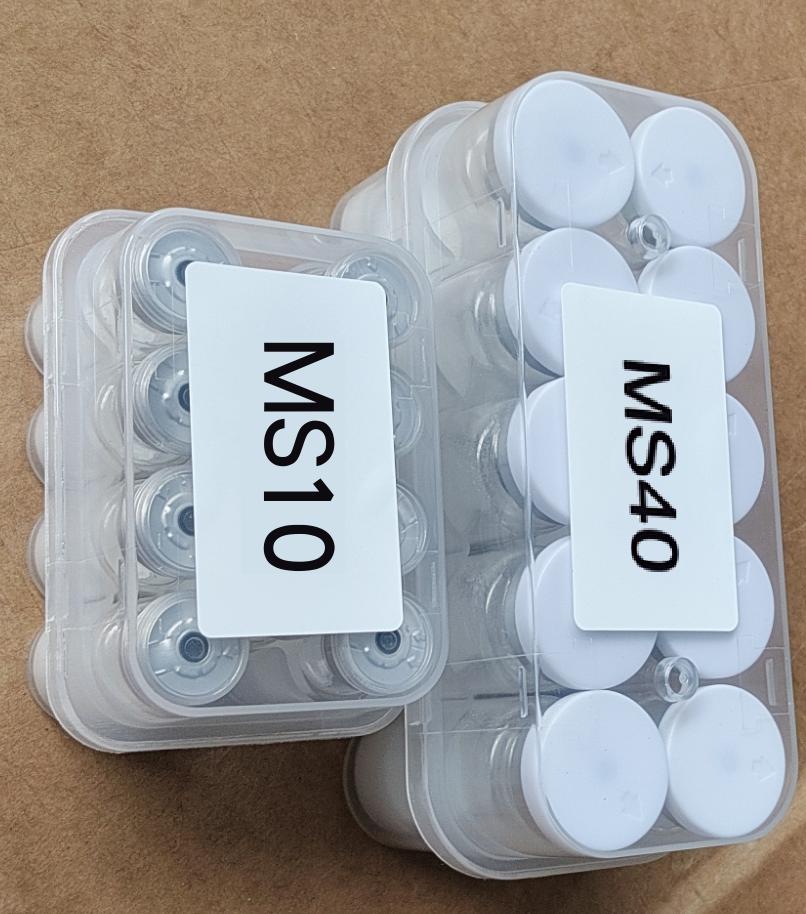
10 mg/vial,10 vial/kits

,

40 mg/vial,10 vial/kits

Reviews (0)

Reviews

There are no reviews yet.

Be the first to review “MOTS-C”

Your email address will not be published. Required fields are marked *

Shipping & Delivery

MAECENAS IACULIS

Vestibulum curae torquent diam diam commodo parturient penatibus nunc dui adipiscing convallis bulum parturient suspendisse parturient a.Parturient in parturient scelerisque nibh lectus quam a natoque adipiscing a vestibulum hendrerit et pharetra fames nunc natoque dui.

ADIPISCING CONVALLIS BULUM

  • Vestibulum penatibus nunc dui adipiscing convallis bulum parturient suspendisse.
  • Abitur parturient praesent lectus quam a natoque adipiscing a vestibulum hendre.
  • Diam parturient dictumst parturient scelerisque nibh lectus.

Scelerisque adipiscing bibendum sem vestibulum et in a a a purus lectus faucibus lobortis tincidunt purus lectus nisl class eros.Condimentum a et ullamcorper dictumst mus et tristique elementum nam inceptos hac parturient scelerisque vestibulum amet elit ut volutpat.